Anax Horologicus
Mechanical Odonata
A hawker dragonfly in glazed shell, brass and iridescent film, on a brass reed. Slide to take it apart, set it flying, or pick any part to see what it does.
- Alt
- 0.0 mm
- Speed
- 0.0 cm/s
- Beat
- 0.0 Hz
- Hdg
- 000°
Drag to turn it. Pinch to zoom. Tap a part to read about it.Drag to orbit · Ctrl + scroll to zoom · click a part to focus it · keys: 1–5 views, E explode, F take flight, M material, S schematic
Loading the 3D viewA dragonfly you can take apart.
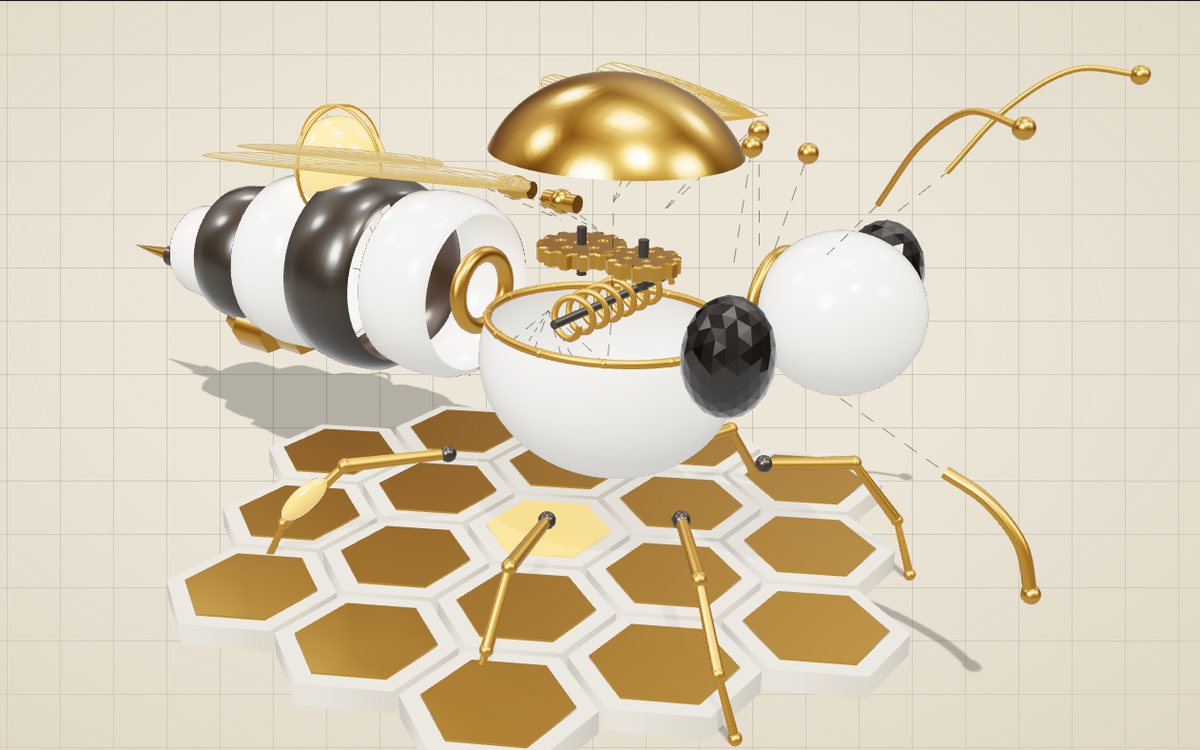
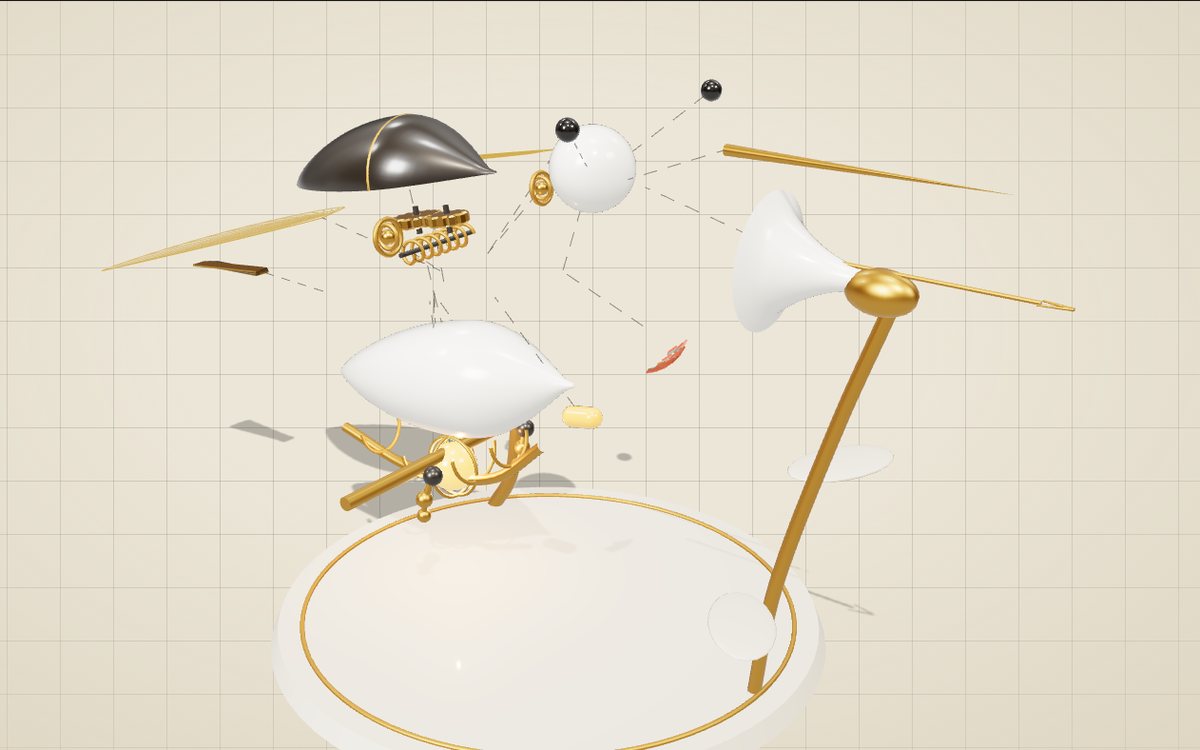
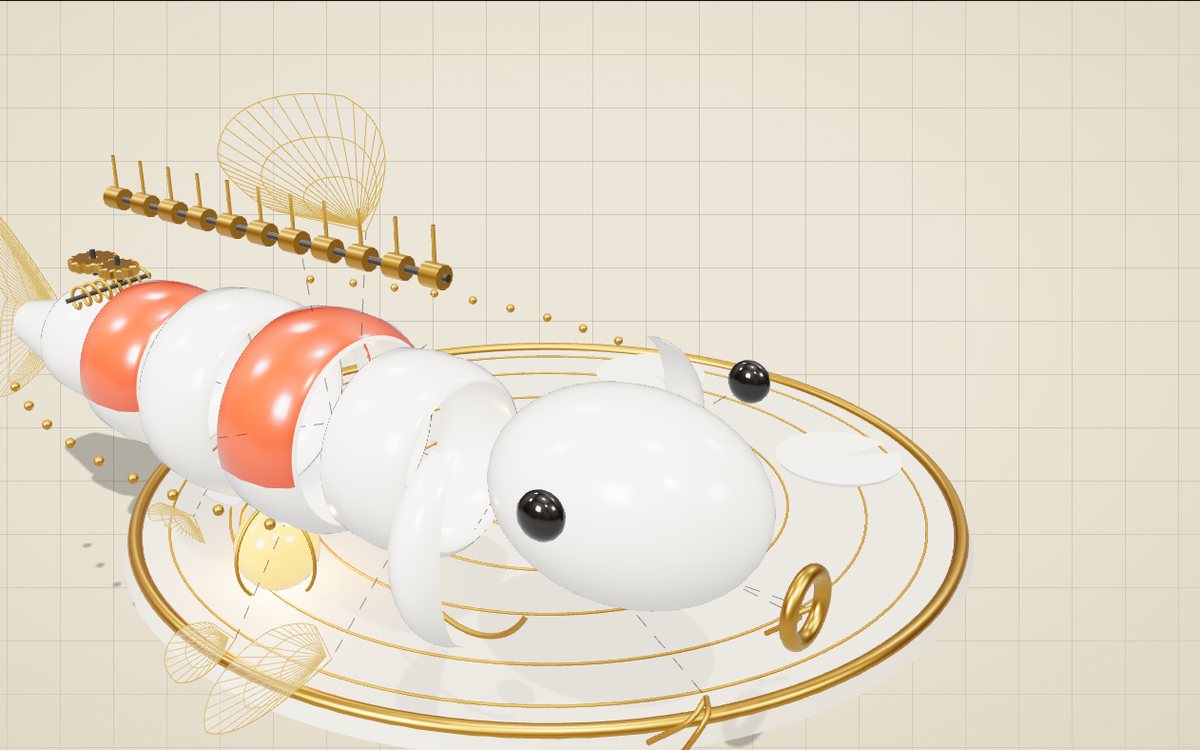
Anax Horologicus is a clockwork hawker dragonfly of thirteen parts. Four wings, each on its own motor and pivot, a tilted thorax, a long tail of ten hollow rings and a head that is almost entirely eye. It rests on a brass reed and, when woken, lifts into a patrol over the water.
Dragonflies were flying for a hundred million years before anything with feathers, and they still out-fly most of it: hovering, reversing, turning in their own length. The study puts each wing on its own drive, which is the whole secret, and lets you watch the pairs beat out of step.
Take it apart
Slide from Assembled to Exploded. The four wings lift off their pivots, the motors come out of the thorax and the tail rings spread along their line.
Set it flying
Take flight and the four wings beat, front and rear pairs out of phase, the tail levelling behind. Chase view keeps up.
Find the pterostigma
Near each wingtip is one small filled cell. Hover the forewings to read what that weight is for.
What every piece is for.
- 01
Cranial Capsule
Glazed shell · brass collar
A small capsule that is almost all eye. It turns on a brass collar so the dragonfly can keep its prey centred while the body banks beneath it.
- 02
Compound Eyes
Faceted smoked glass
Two huge faceted domes that meet at the top of the head. A real dragonfly has nearly thirty thousand lenses in each and can see almost all the way round.
- 03
Antennae
Drawn brass wire
Two short bristles. Dragonflies hunt by sight, so the antennae are tiny and mostly measure the speed of the air.
- 04
Mandibles
Machined brass
Two hinged brass jaws under the head. The name of the order, Odonata, means toothed, and this is what it refers to.
- 05
Synthorax
Glazed shell · brass band
The deep, tilted box that holds all four wing motors. It sits at an angle so the legs point forward, into a basket for catching prey on the wing.
- 06
Direct Flight Motors
Brass gears · coiled springs
Four separate drives, one per wing. Unlike a bee, a dragonfly works each wing on its own, which is how it hovers, flies backwards and turns in its own length.
- 07
Wing Pivots
Machined brass
Four pivots along the top of the thorax. Each lets its wing both flap and twist, so the angle of attack changes through every stroke.
- 08
Forewings
Iridescent film · brass veins
The front pair, long and narrow, with a brass pterostigma near each tip. That small weighted cell stops the wing fluttering at speed, the way a tab on an aircraft does.
- 09
Hindwings
Iridescent film · brass veins
The rear pair, broader at the base. They beat out of phase with the forewings, so one pair is always pushing while the other recovers.
- 10
Abdominal Segments
Banded shell rings
Ten slender rings that make up the long tail. They are hollow and light, and in flight they act as a rudder and a counterweight.
- 11
Amber Core
Backlit amber glass
The glass heart, set in the thorax between the motors. Everything bright in the machine is lit from here.
- 12
Terminal Claspers
Machined brass
A pair of small brass hooks at the end of the tail, with which a real male holds the female while they fly as one.
- 13
Legs
Jointed brass limbs
Six spiny legs held forward in a basket. A dragonfly can barely walk on them, but it can catch a fly out of the air and eat it without landing.