Grandparents keep things. Cards from decades ago, drawings from children who are now in their forties, a school photograph in a wallet that has been replaced three times.
That is the useful fact here. The question is not what they need, because they need nothing. It is what is worth them keeping, and the answer is nearly always evidence of the grandchildren at this exact age.
Why the homemade thing wins
It is not sentiment, or not only sentiment. It is that a child's own work is the only thing in the world that records what they were like at that moment, and that moment is very short.
A drawing by a six-year-old is a document. Their handwriting at six exists for about a year. Their voice at six exists for about two. Every grandparent knows this, which is why the drawing goes on the fridge and the expensive candle goes in a cupboard.
The mistake adults make is improving it. Redoing the card because the writing was messy, choosing the neat drawing over the strange one, typing up what the child said. Every one of those edits removes the thing that made it valuable and replaces it with something an adult made.
Keep the mess. The mess is the point.
Putting it in a form that lasts
The weakness of homemade gifts is durability, and that is solvable without sanitising anything.
Scan the drawing and print it properly. Same drawing, on decent paper, at a size that can be framed. Nothing has been changed, it has just been made to survive.
Record the voice rather than transcribing it. A child telling a story or singing badly is worth a hundred times the written version.
Put the photographs in something physical. Grandparents overwhelmingly do not look at photographs on a phone. A printed book with the names and dates written in is a different object entirely, and the names matter enormously later.
Date everything. Nobody ever regrets this and everybody eventually needs it.

When there is no room
Many grandparents are actively trying to have fewer objects, and a lovely thing that has to be found space for is a mixed gift.
The zero-footprint options are the strongest ones anyway.
A visit, arranged. Not offered, arranged, with a date. This is what is actually wanted and it is what people are too polite to ask for.
A recording. Messages from each grandchild, or an interview where the children ask the questions. The second is much better than it sounds: children ask things adults would not, and get answers adults never hear.
A replacement rather than an addition. The photograph in the frame they already have. The new picture in the wallet.
A game with the grandchildren in it
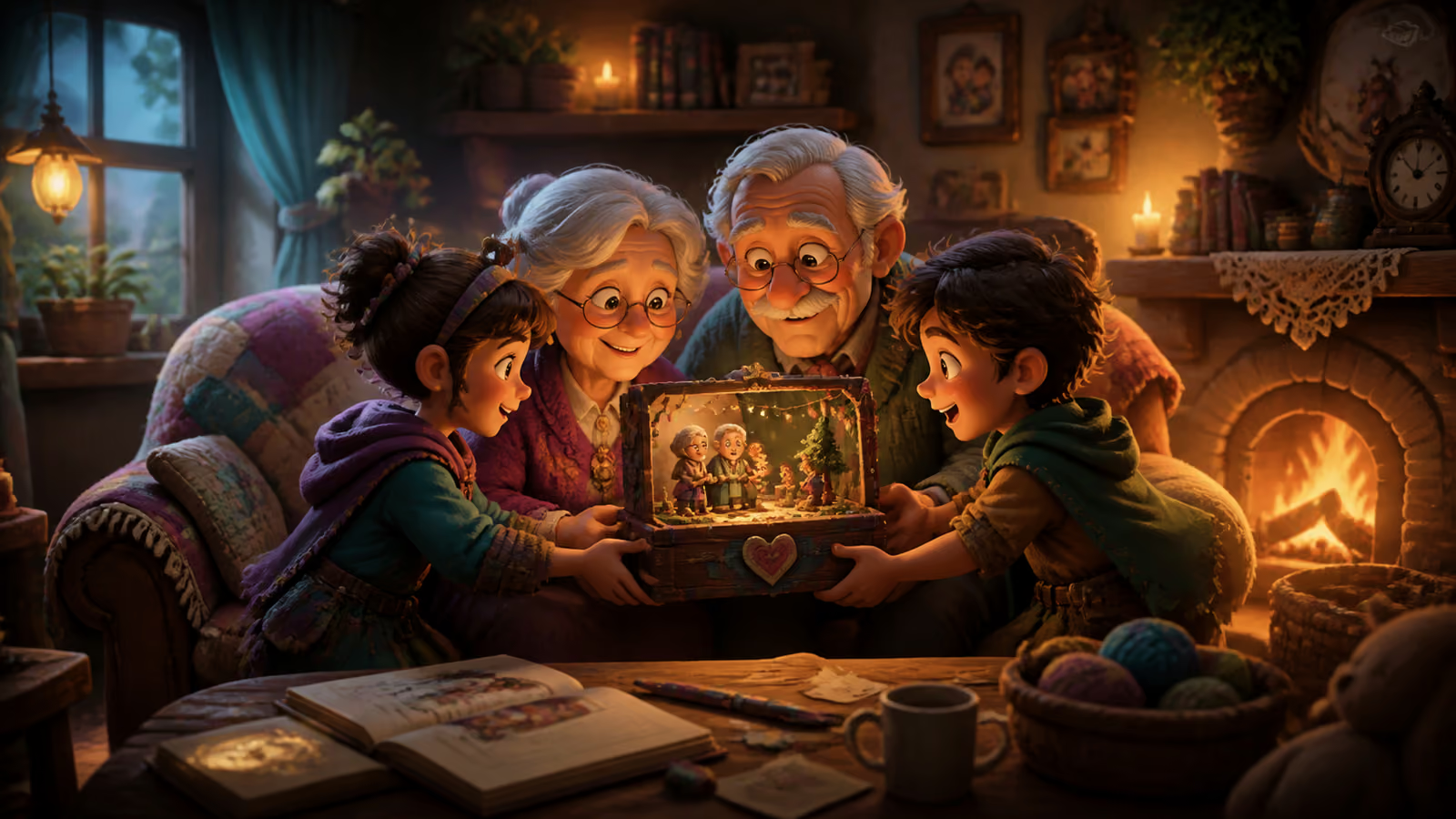
This is a common brief and it works for a specific reason: it puts the grandchildren in front of the grandparent in a form that can be shown to visitors.
That last part is the real function. At a certain age there is genuine value in having something to bring out when people come round, and a hand-painted game with the great-grandchildren in it is unusual enough to be worth showing.
Two things about the brief matter more than anything else.
Short and gentle. Ten minutes, no way to lose, nothing requiring quick reactions. That is a setting rather than a limitation, and the reasoning is in does a game need a way to lose.
Recognisable in the first thirty seconds. The grandchildren, the house, the dog. If somebody stops playing after two minutes they should already have had the whole point, which is the argument in how long a custom game should take to finish.
The children can be genuinely involved: choosing what their character looks like, deciding what the collectibles are, naming the levels. That turns it from a bought gift into something they made, which is where this article started.
What to avoid
Anything with "World's Best Grandad" on it. It is a category, not a person.
Another ornament.
Technology that needs setting up by them. A digital photo frame that requires an account is a gift with homework attached.
Tidying up the children's contribution.
What each age can actually contribute
The child's own work is the gift, and what that means in practice changes a great deal with age.
Two to four. A drawing, and their voice. Do not direct either. A recording of a three-year-old attempting a song is worth more than anything you could arrange for them to make, and it exists for about a year.
Five to eight. This is the peak. Handwriting exists, opinions exist, and self-consciousness has not yet arrived. A letter about why they like their grandparent, in their own spelling, is close to the best gift available at any price.
Nine to twelve. Old enough to make something properly and young enough to be enthusiastic about it. Baking, a photo book they choose the pictures for, a video they script themselves.
Teenagers. The tricky band, because they are now self-conscious and a forced craft project is worse than nothing. What works is giving them a real job: taking the photographs, doing the technical part, interviewing the grandparent on camera. Being treated as competent is the thing.
If the grandparents are far away
Distance is the common case and it changes the format rather than the answer.
Post something physical. A screen is not the same, and grandparents overwhelmingly do not look at photographs on a phone. Something that arrives, gets opened, and stays out.
Record rather than call. A video the children made can be watched repeatedly, at their own pace, and shown to visitors. A video call is lovely and gone.
Set up whatever it is before it arrives, if it needs setting up. A gift that requires a grandparent to follow instructions over the phone is a gift enjoyed once, with help.
And date everything. The family will need that much sooner than anyone expects.
What this means
The child's own work is the gift. Everything else is the frame around it.
Date it and write the names down. The family will need that far more than anyone expects.
And arrange the visit. Whatever else you do.
For the older milestones specifically, 80th birthday gift ideas and 90th birthday gift ideas go into the format questions in more detail.