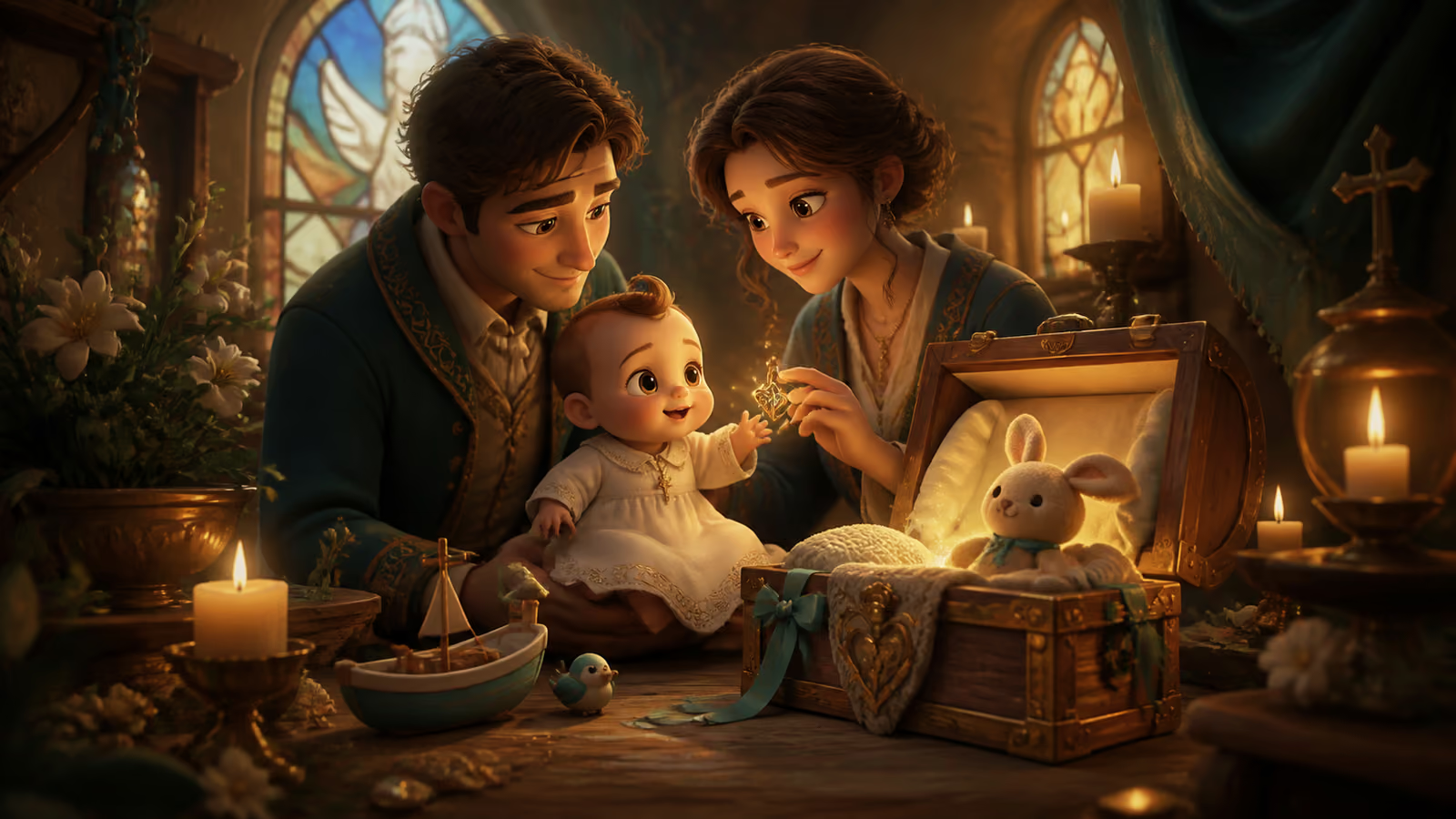
A christening present is given to somebody who will not remember receiving it, on a day they will not remember happening, by people some of whom they will never meet.
Which makes it an unusual gift, and the way to think about it is that you are not buying for the baby. You are buying for the adult that baby becomes, who will one day open a box and find out what people thought at the beginning.
Why silver became the tradition
The traditional gifts, a silver cup, a spoon, a bracelet, are traditional for a reason that is worth extracting from the tradition itself.
Silver survives. It does not perish, it does not go out of fashion in a way that matters, it can be engraved with a date and a name, and it is valuable enough that nobody throws it away during a house clearance.
That is the actual requirement: something that will still exist and still be identifiable in twenty or fifty years. Silver meets it. So do several other things, and knowing what the requirement is lets you meet it differently.
What actually survives, and why silver is not the only answer
The requirement extracted from the tradition: something that will still exist and still be identifiable in twenty or fifty years. Silver meets it. So do most of these.
Something silver, engraved and dated
The tradition, and it earns its place. The date is what turns an object into a record: an undated silver cup is a cup, and a dated one is a document. Whether it is a cup, a spoon or a bracelet matters far less than whether the date is on it.
A letter by hand from everybody present
Each person writes to the child, the letters are sealed, and the parents keep them. It is close to the best thing available at a christening, it costs nothing, and it is the only gift here that could not be reconstructed later by anybody.
The photographs printed, with the names on the back
Most families now have thousands of pictures and almost none printed. Print the good ones from the day and write who is in them on the back. The names are the part that gets lost and the part that will be wanted.
A recording of the room
Ten minutes of the people who came, saying who they are and something to the child. It takes one phone and no planning, and the voices are the thing that photographs cannot hold.
Something that captures what the family was like at that moment
The house, the street, the older siblings at the age they were, the dog. Twenty years later this is the interesting part, and at the time it looks so ordinary that nobody thinks to record it.
A book with the date written inside the cover
Something they will actually read at eight or ten rather than a christening keepsake edition. Inscribed with the date and who it is from, it becomes a dated object that also gets used, which very little on any christening list manages.
The newspaper from the day
Cheap, easy to source, and genuinely interesting to a person in their twenties in a way that no keepsake is. It also dates itself perfectly and needs no explanation.
A bottle laid down for their eighteenth
Bought this year, stored properly, opened in eighteen. It requires almost nothing from the parents beyond a shelf, and it makes the gift into an event twice: once now and once a long way off.
A tree planted this year
The only present here that gets measurably bigger. Planted somewhere it can be visited, it becomes the physical record of how long ago the christening was, which is a job an object in a drawer cannot do.
Money in a form that is locked away
Unromantic, genuinely useful, and it should be given alongside something else rather than instead of it. The locking away is the point: money given openly to a young family is spent on the young family, which is fine but is not a christening gift.
A letter written every year by the same person
A commitment rather than an object. One page a year from a godparent, kept together, handed over at eighteen. It is the hardest gift on this list to give because it never finishes, and it is the one most likely to be read repeatedly.
A record of the family as it is this month, made playable
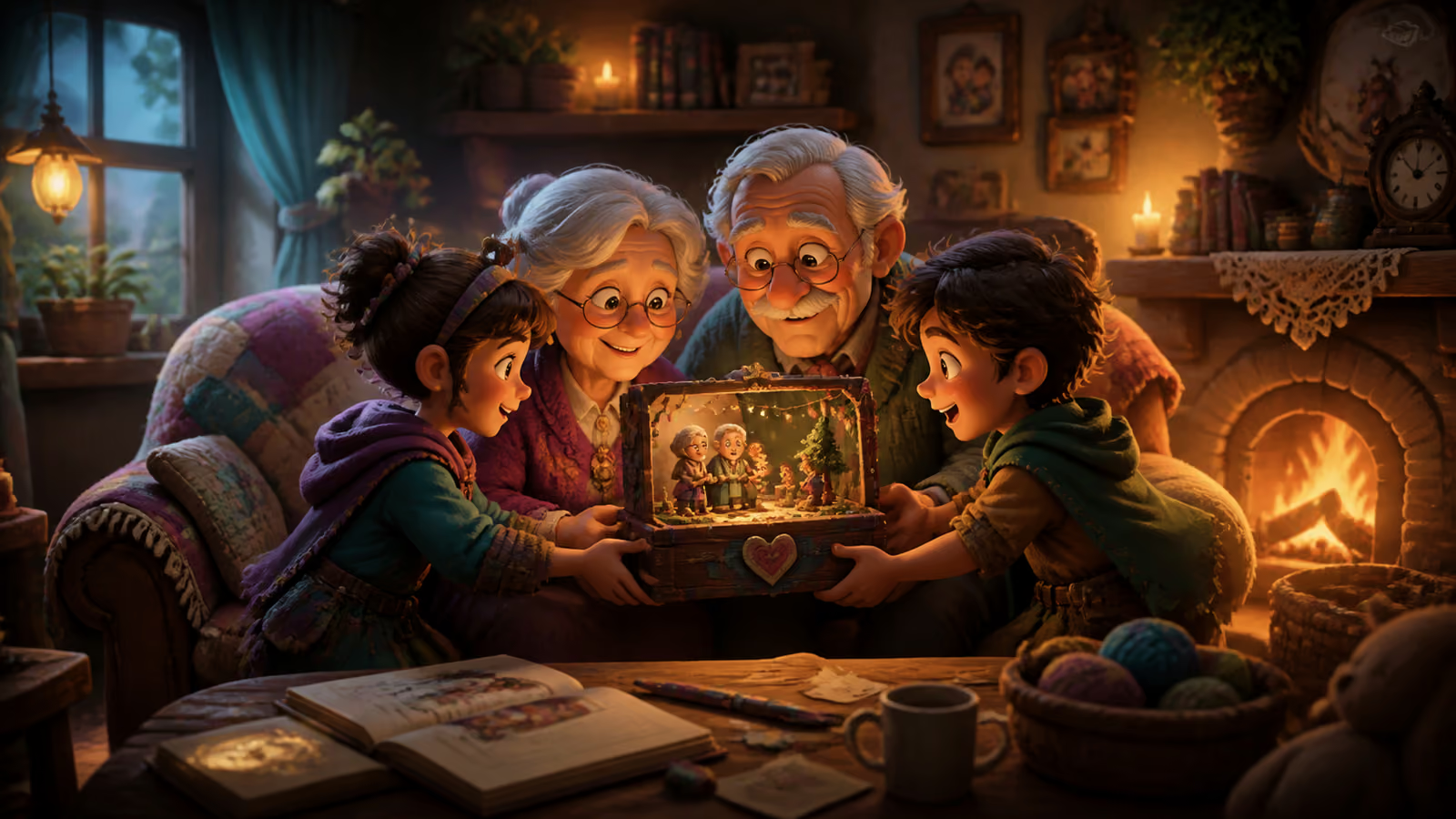
Obviously not a present a baby can use, and worth saying so plainly. It belongs with the sealed letters above: a short hand-painted piece with the house, the older siblings at the age they are now and the dog, kept for the day the child is old enough to open it.
What does not survive
Clothes. Outgrown in weeks, kept out of guilt, eventually given away.
Toys for a newborn. They will be one of forty and they will be gone within two years.
Anything requiring maintenance. A plant, a subscription, anything that becomes an obligation for parents who are extremely tired.
Decorative items for the nursery. The nursery is temporary and its contents follow it.

The gift given twice
There is a version of this that is worth mentioning specifically, because it is unusual and it works.
Give something explicitly to be opened later. At eighteen, or twenty-one, or on the day they leave home. Handed to the parents at the christening, put away, and produced at the agreed moment.
This turns one gift into two events: the day it was given, which the parents remember, and the day it was opened, which the child does. It also removes the awkwardness of the christening present entirely, because it no longer has to be appreciated by anybody on the day.
Letters work best. So does anything that captures the world as it was: a newspaper from the day, a photograph of the street, a recording of the parents talking about what they hoped for.
A commissioned game as a keepsake
An unusual choice here, and the honest position is that it suits some families and not others.
What it is not: a present a baby can use. Obviously.
What it can be: a record of the family at this moment, in a form the child can actually experience later. A short, hand-painted piece with the house, the siblings, the pets and the parents in it as they are now, given to be opened when the child is old enough to play it.
That is a genuinely different object from a photograph album, because the child moves through it rather than looking at it, and because the version of their parents in it is a version they will not otherwise have seen.
The practical brief is short: a single-level build starting at £99 is plenty, and shorter is better for something meant to be shown rather than mastered. Everything worth seeing goes at the front, for the reasons in how long a custom game should take to finish.
If there is an older sibling, having them help design it is worth doing. It makes the gift theirs as well, which is a real consideration on a day that is entirely about the new arrival.
The question nobody asks
Ask the parents what they want.
The baby is receiving an enormous number of gifts and is aware of none of them. The parents are exhausted, out of pocket, and hosting an event. A gift for them, or a practical contribution to the day, is very often the more useful thing and almost nobody offers it.
It is also the polite way to establish whether the family wants anything religious, which varies enormously and is awkward to guess at.
What this means
Date it and write the names down. Every time.
Consider giving it to be opened later. It is a better gift and a better story.
And ask the parents. They will tell you, and they will be relieved to be asked.
For the parents themselves, new baby gift ideas for the parents covers the other half of this.