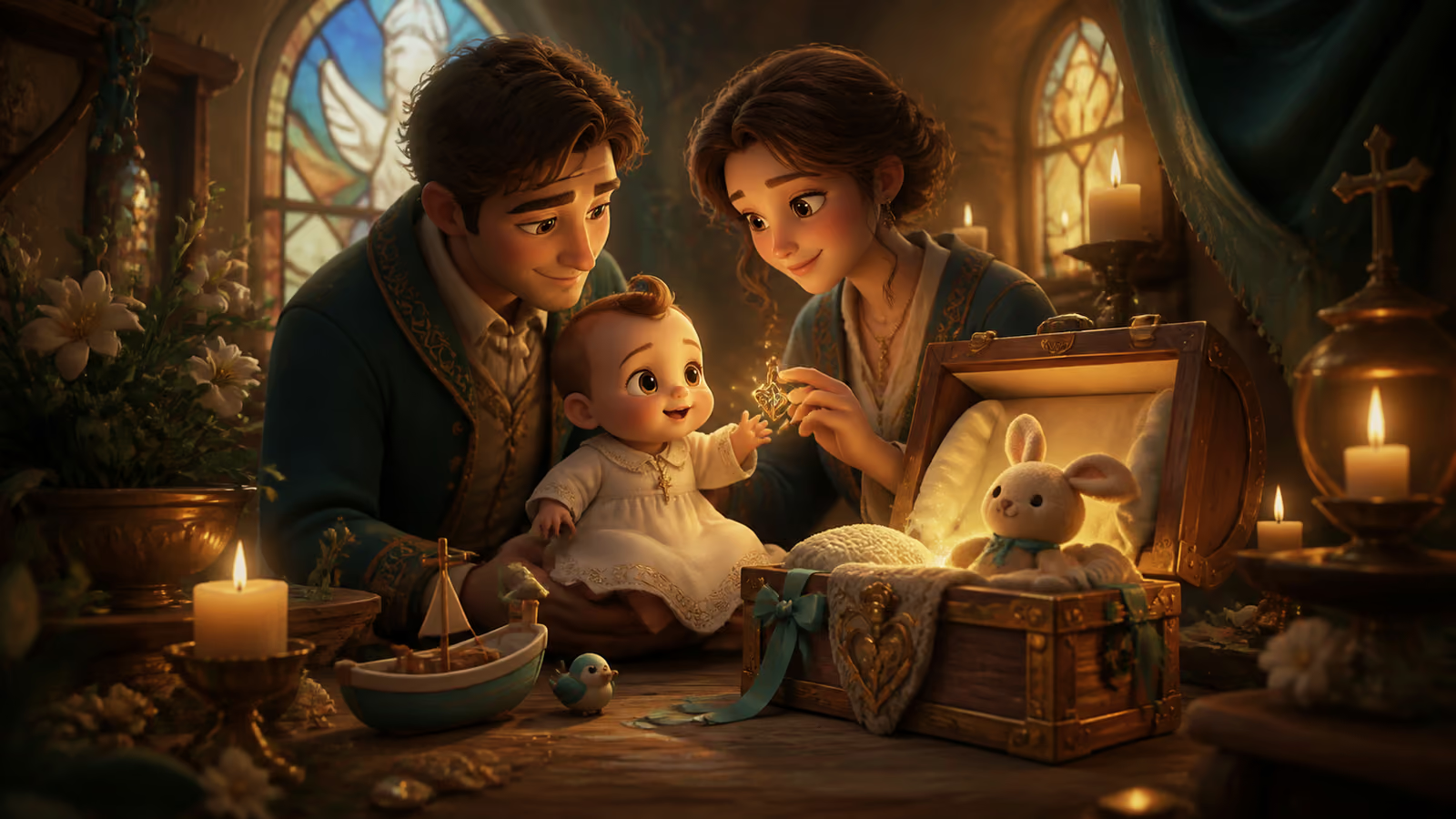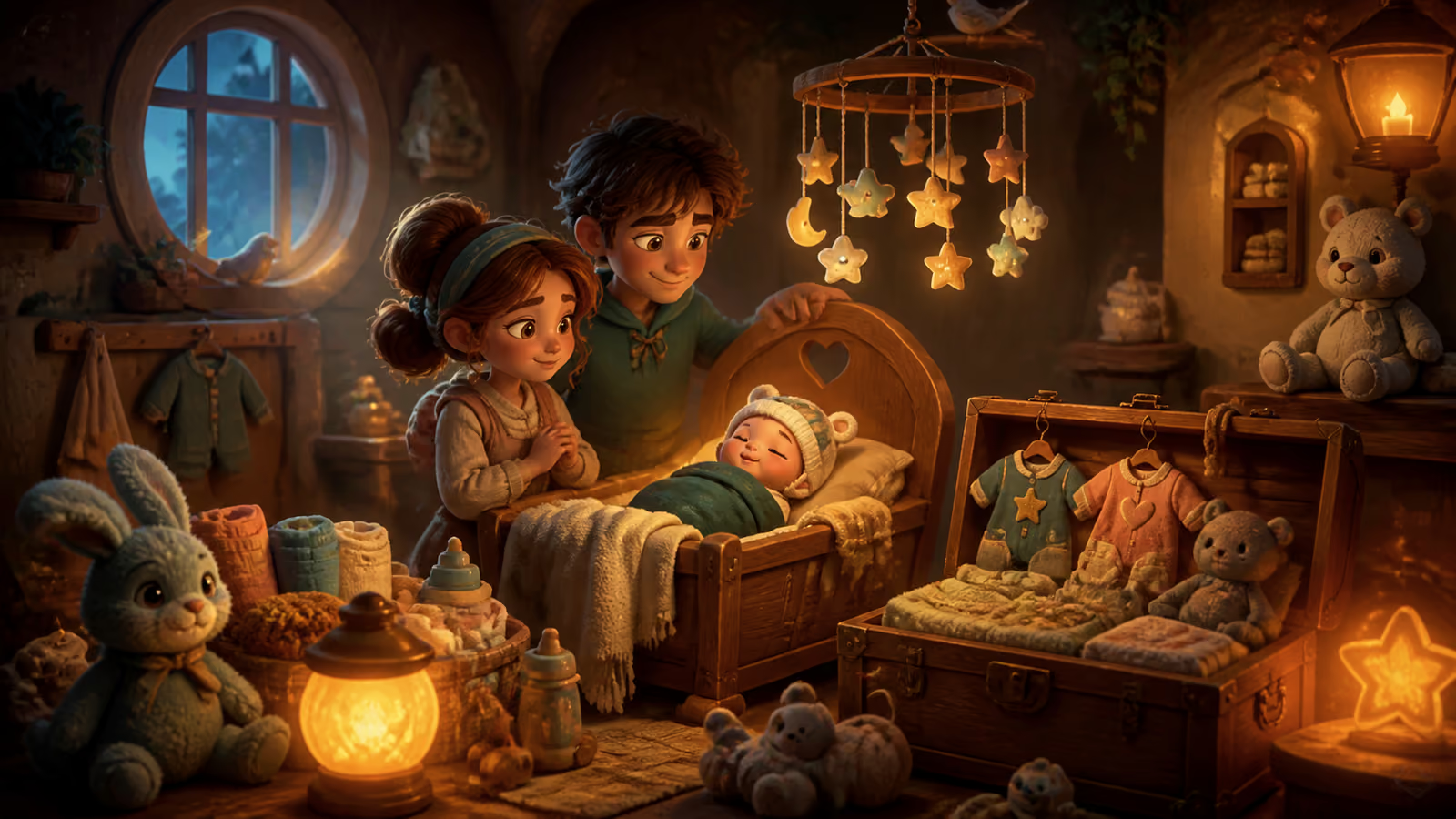
A new baby generates an extraordinary volume of presents, nearly all of them for a person who cannot see further than about thirty centimetres and owns nothing.
Meanwhile two adults in the same house have not slept, have not eaten properly in a week, and are receiving a steady stream of visitors they must make tea for.
That gap is the entire opportunity.
What food should you give new parents?
Give a meal that requires nothing from them, in a container that does not need returning. Food is the single most valued gift in the first month, by a distance, and the one people most often get slightly wrong.
The rules that make it work.
It must require nothing. No preparation, no ingredients to add, no decisions. Reheat in one step and eat.
The container must not need returning. A dish that has to be washed and given back is an obligation, and obligations are the last thing anybody in that house has capacity for.
Deliver rather than bring. Handing it over at the door and leaving is a gift. Bringing it in and staying for two hours is a visit disguised as a gift.
Breakfast and one-handed food count. A great deal of eating in the first month happens standing up, at four in the morning, with one arm occupied. Anything that survives that is worth more than a nice dinner.
How can you give new parents time?
Make a specific offer of time rather than a vague one. It is the second category, and the one that requires the most from the giver.
Hold the baby so somebody can have a shower. Not a metaphorical offer, an actual arrival at an agreed time to do exactly that.
Take the older sibling out for the afternoon. This is enormous and almost nobody thinks of it. The older child has just had their entire world reorganised and everyone is looking at the baby.
Do a specific chore. Not "let me know if you need anything", which requires them to think of something and then ask, which they will not do. Instead: I am coming on Tuesday to do your washing, or your shopping, or your bins.
The pattern is that a vague offer transfers work to the recipient and a specific one does not.

What objects do new parents actually want?
If it has to be an object, choose something for them rather than the household, practical items in the sizes nobody buys, or a proper photograph of the three of them.
Something for them, not the household. A very good coffee. A book. Something that is not baby-related in any way, which becomes surprisingly rare surprisingly quickly.
Practical items in the size nobody buys. Everyone buys newborn clothes. Almost nobody buys six to nine months, and by then the money and the enthusiasm have both run out.
A photograph of the three of them, taken properly. In the first weeks almost every picture is of the baby, and there are very few of the parents, because the parents are holding the camera and feel dreadful. Somebody arriving to take a decent photograph of all of them is a gift they will have for fifty years.
Is a keepsake a good new baby gift?
Yes, as long as anything intended as a record is given with the explicit note that it is for later.
New parents do not have the bandwidth to appreciate something meaningful in week two, and a gift that requires attention becomes a small guilt. Giving it with "this is not for now, put it away" removes that entirely and makes the gift better rather than worse.
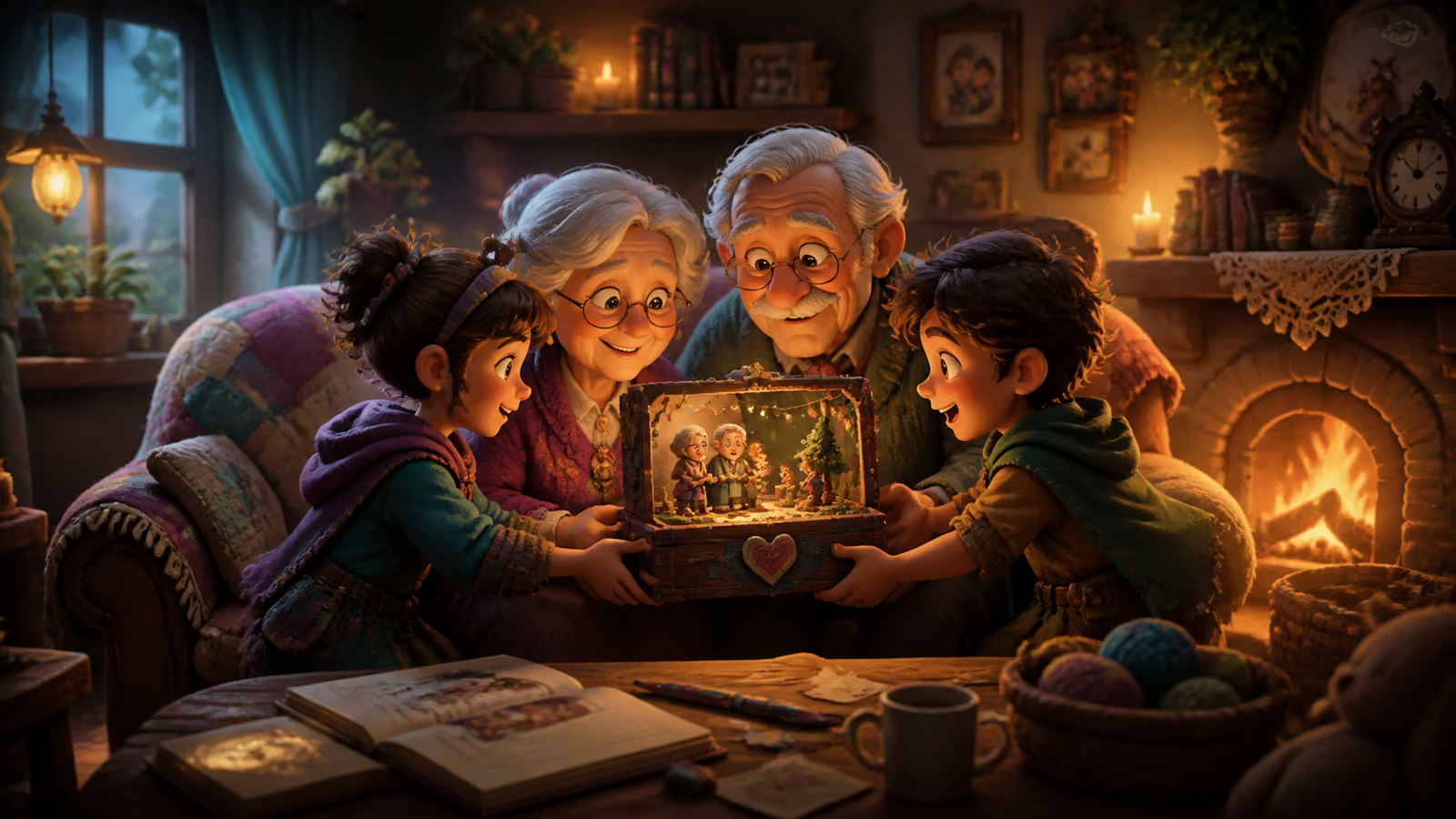
That applies to a commissioned piece as much as anything else. A short hand-painted game with the house, the older sibling and the pets in it is a record of what the family looked like at this specific moment, which is a thing that becomes unrecoverable extremely quickly and that nobody thinks to capture at the time.
It is not something to open in the first month. It is something to open on the first birthday, or to keep for the child, which is the same reasoning as in christening and naming day gift ideas.
If there is an older sibling, putting them in it as a main character is worth considering. It is one of the few gifts at this moment that is genuinely about them.
What should you not buy for a new baby?
Avoid anything that adds to the pile, needs effort from the parents, or turns up unannounced.
More newborn clothes. There are already too many and the baby is growing out of them this week.
Anything scented. Candles, lotions, washing products. A meaningful number of babies and parents react badly, and the gift becomes something to get rid of guiltily.
Anything requiring assembly.
Toys for a newborn. They cannot use them, they will be superseded, and they are storage.
Unannounced visits. However well meant.
What should you give for a second or third baby?
Buy for the older sibling, take the older one out, and still bring food, because by the second they own everything the baby needs. Almost all new baby advice is written for a first, and the second is a genuinely different situation that people keep buying for as though it were the same.
By the second, they own everything. The equipment exists, the clothes exist, the confidence largely exists. What does not exist is any spare capacity, because there is now a toddler as well.
Which changes the answer completely.
Buy for the older sibling. This is the single most useful thing available and hardly anybody does it. The older child has just had their world reorganised and every adult in the building is looking at the baby. A small present for them, given at the same time, is worth more to the household than anything for the newborn.
Take the older one out. An afternoon, arranged, so the parents have one child instead of two for a few hours. It is enormous.
Food, still. More than the first time, not less.
What to avoid on a second: anything for the baby. They have it, in the loft, in the right size, already.
What helps when the birth has been difficult?
Practical, quiet help, and a message rather than silence. Not every birth is straightforward, and the standard cheerful gift can land badly.
If there has been a stay in special care, a difficult delivery, or a long spell in hospital, the parents are frequently exhausted in a way that celebration does not reach. What helps is practical and quiet: food, laundry, the older child taken out, somebody dealing with the house.
Say something rather than nothing. The most common regret people report is friends who went quiet because they did not know what to say. A short message acknowledging that it has been hard, with no advice attached, is enough.
And do not ask for the story. They will tell it if they want to.
What this means
Feed them. It is the answer more often than anything else.
Make the offer specific. Name the day and the task.
And if you give something to keep, say it is for later. That single sentence turns a burden back into a gift.