The difficulty here is not that your partner plays games. It is that you are buying for a hobby you cannot assess from the outside, in a market that produces an enormous amount of merchandise aimed at the idea of a gamer rather than at any actual person.
That is the same problem as buying for any specialist interest, with one additional wrinkle: the specialist merchandise is unusually plentiful and unusually generic.
Why the obvious gifts miss
Buying a specific game. High risk unless you have been given a title. Their taste is specific, they probably already own it, and the ones they want are on a list you cannot see. A gift card is unromantic and correct.
Themed merchandise. A controller-shaped anything with hearts on it, a mug about levelling up, a t-shirt with a joke about respawning. These are gifts to a demographic, and receiving one tells you that somebody bought for the category rather than for you.
Anything that reads as a comment on the hobby. A gift that gently suggests they might do something else is not a Valentine's present.
What tends to work
Audio first, seating second, and most of what follows is about time rather than equipment.
A properly good headset
The reliable one. If somebody spends three hours a day at a desk with a headset on, it is among the highest-leverage objects in their life, and most people are wearing whatever came free or cheapest. The difference between free and good here is not subtle.
A chair that is not slowly ruining them
Noticeable every single day and almost never something people buy for themselves. A good office chair outperforms most things sold as gaming chairs at the same money, and it is the gift they will still be sitting in next year.
An evening where the household is handled
Slightly odd as a romantic gesture and genuinely valued, particularly for anyone with children. The gift is not permission, it is the actual absence of anything needing them: no interruptions, no queue of small tasks waiting at the end.
Sitting down and playing with them, and then doing it again
Being bad at something in front of somebody who is good at it is a real gesture. The caveat matters: doing it once as a Valentine's stunt and never again is transparent and lands worse than not trying. Commit to a few weeks or pick something else.
A game built for two people on one sofa
Not a game you chose for them to play alone, which is the high-risk gift. Something co-operative, on one screen, plus the second controller it needs. It converts a parallel hobby into a shared one, which is the whole problem with two people who both play.
The peripheral they have talked themselves out of
The wheel, the flight stick, the mechanical keyboard, the second monitor. There is usually exactly one of these, they have researched it thoroughly, and they have decided it is too indulgent to buy. That decision is what a present is for.
The one thing about the setup that annoys them daily
The cable that has to be unplugged, the desk that is two inches too high, the glare on the screen at four in the afternoon. Fixing a daily irritation is unglamorous to wrap and remembered longer than most objects.
A year of what they already subscribe to
Renewed rather than replaced. It commits them to nothing, cancels nothing they like, and quietly removes a bill. Not exciting to open, which is why it goes alongside something else rather than on its own.
The art book or the soundtrack for the one game they will not stop talking about
Worth separating from the merchandise problem below: a mug about levelling up is a gift to a demographic, whereas the vinyl of a specific score they have listened to for years is a gift to a person. The test is whether you can name the game without checking.
A day out to something adjacent
A tournament, an exhibition, a games festival, an old-fashioned arcade if there is one within reach. It treats the interest as a thing worth leaving the house for, which is a form of being taken seriously that most people who play a lot rarely get.
A game about the two of you, rather than about gaming
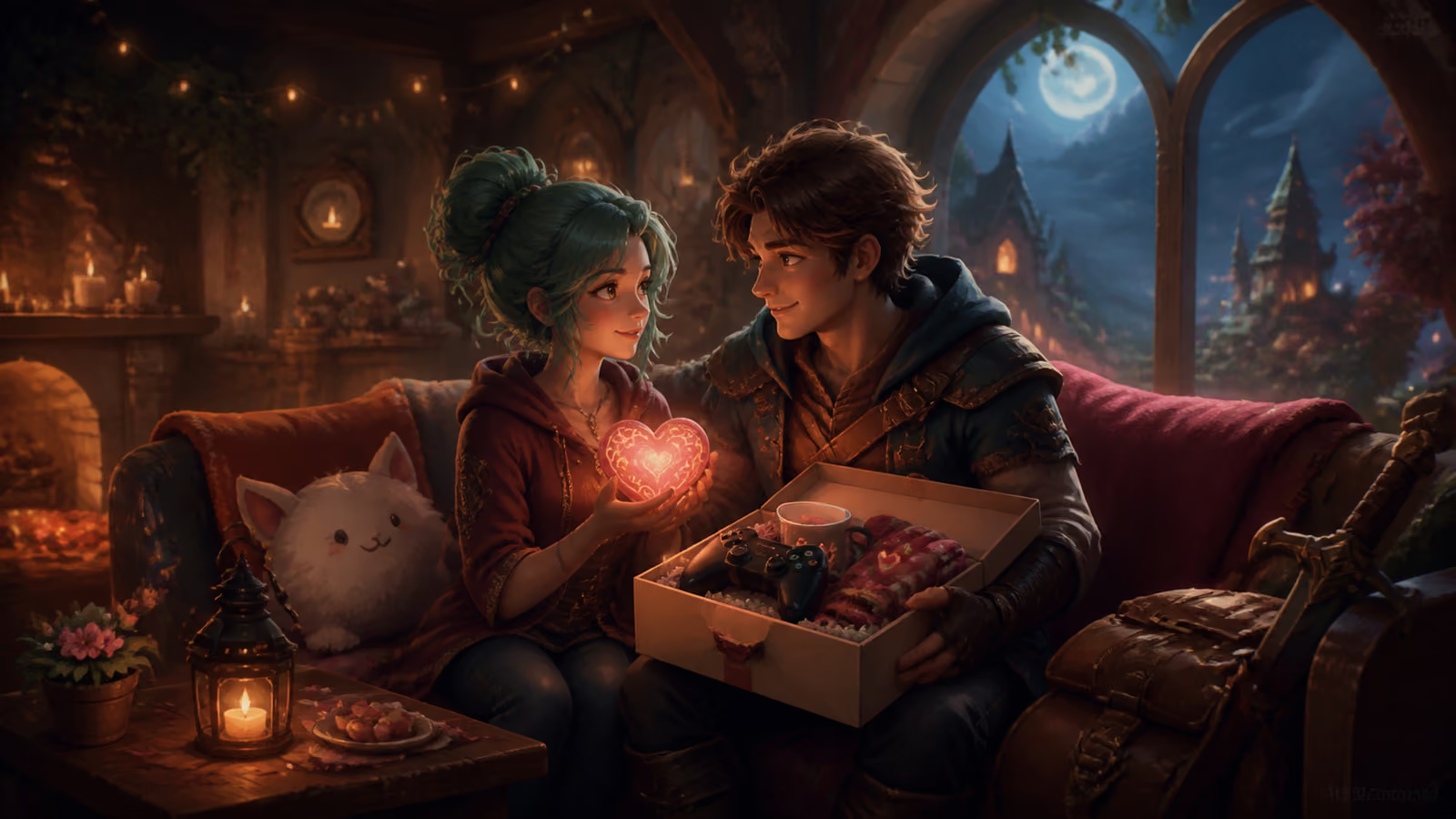
The strongest category here, and it works better for a partner who plays than for one who does not. For somebody who plays constantly the format is completely ordinary, so a game that is genuinely about the pair of you uses the medium instead of referencing it, which is the opposite of a mug with a joke about respawning.
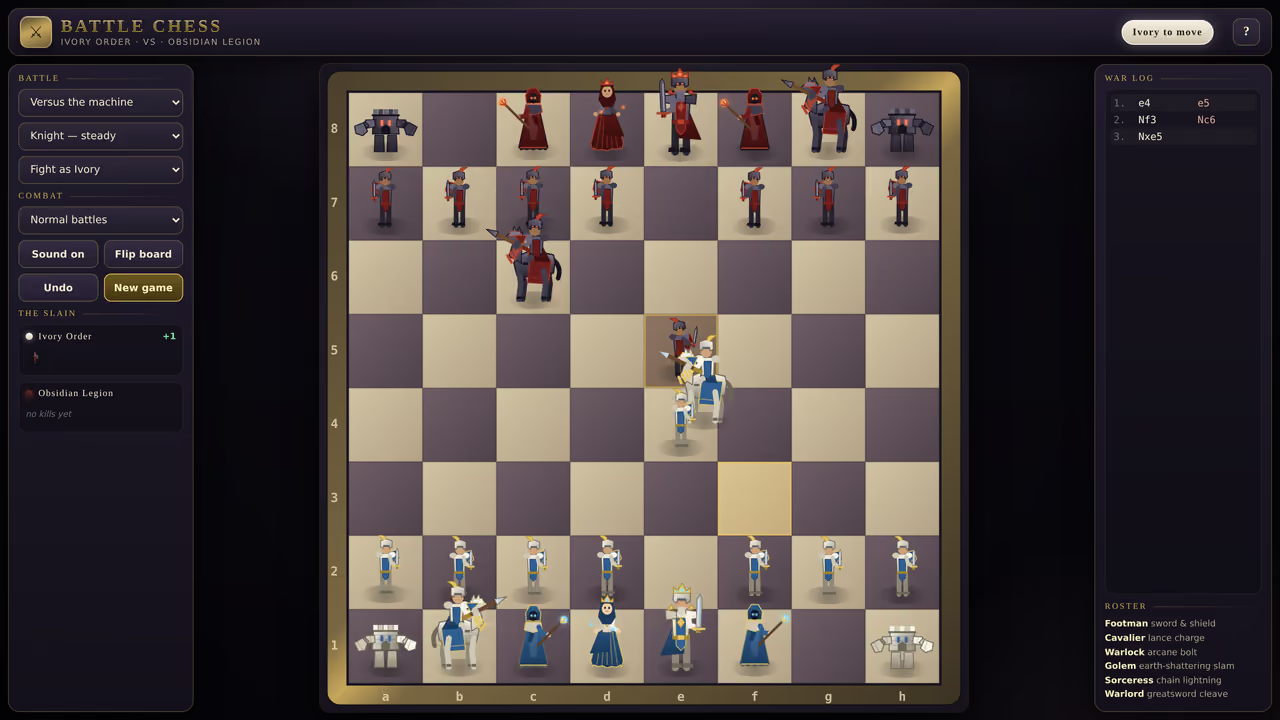
Why a commissioned game suits this case
There is a specific reason this works better for a partner who plays than for one who does not.
For somebody who does not play, being in a game is a novelty, and part of the reaction is to the format itself. For somebody who plays constantly, the format is completely ordinary, so none of the attention goes to it. All of it goes to the content, which is the two of you.
That makes it closer to giving a musician a piece of music than to giving them a novelty. The frame disappears and the subject is all that is left.
The brief that works is your actual relationship rather than gaming as a theme. Where you met, as a level. The holiday. The flat. The running argument. Both of you painted from photographs as the characters. The in-jokes as the level names.
What does not work is a game about them being a gamer, which is the same mistake as the themed merchandise wearing a more expensive coat.
The tiers are £99 for a single level and £349 for a multi-level build. For two people and one story, the smaller tier is usually enough, and short is better anyway because it will be played in one sitting on the evening, which is the argument in how long a custom game should take to finish.
One practical note: use ordinary photographs rather than posed ones. The badly lit picture from the kitchen produces two recognisable people; a formal portrait produces two strangers in nice clothes.
If you both play
A different and easier problem, with a specific answer.
Most couples who both play end up playing separately, in the same room, at different things. The valuable gift is something that produces a shared activity rather than two parallel ones.
That is why the co-operative game and the second controller sit where they do on the list above, and it is worth being deliberate about the choice: something neither of you has played, started together on the night, so nobody is teaching anybody.
The same logic scales up to a group, which is the subject of a fighting game starring your friend group.
What to avoid
Anything with a pun about gaming and love on it.
A game you chose without being told which.
Anything that arrives with a suggestion that they play less.
Merchandise for a game they used to like. Interests move, and buying for the version of them from three years ago is the same error as buying for a teenager's old obsession, described in 16th birthday gift ideas.
What this means
Upgrade the thing they use daily, if you want a safe and genuinely good object.
Or make it about the two of you and use the medium rather than referencing it.
And if you play with them, keep playing with them. That is the actual gift.