The problem with buying for someone who grew up on games is that the obvious gift is the one they have already bought themselves. They own it on Steam. They own it twice, because it was in a sale. They finished it in a weekend in 2019 and have opinions about the ending.
Buying more of the thing they are expert in is a losing game. What works instead falls into two categories: objects they cannot buy for themselves, and things that are about them rather than about games.
Why the obvious gifts fail
Someone turning thirty now was born around 1996. Their formative years were the PlayStation 2, the GameCube, the first Xbox, a shared family computer and, if they were lucky, a handheld on long car journeys.
That matters, because it tells you the nostalgia is specific and dated. A generic "gamer gift" aimed at whatever is popular this year misses by fifteen years. The gifts that land are the ones that reach back to the exact hardware and the exact games that were in the room when they were twelve.
Worth being more precise still, because this is where most gift guides stop and it is the part that does the work. Someone born in 1996 was eleven when Halo 3 came out, eleven for Pokémon Diamond and Pearl on a DS, and fifteen when Minecraft left beta. They were the first cohort whose childhood friendships ran partly through a headset and a server rather than only through a playground, which is why a gift that gathers those specific people has a pull that an object does not.
It also tells you they are not a novice. Anything that treats gaming as a quirky hobby rather than a lifelong competence will be received politely and never mentioned again. The distinction to hold in your head: they do not want to be given gaming. They already have that. They want to be given something that could only exist because of who they are.
Objects they cannot easily buy themselves
Restored hardware from their childhood
Not a mini console. The actual machine, cleaned, recapped, fitted with a modern video output so it works on a current television. A working GameCube with the controller they used is a considerably better gift than any new release.
The work is in the sourcing and the refurbishment, which is precisely why it reads as a gift rather than a transaction.
Suits: anyone with a specific console they still talk about. Budget varies enormously by machine and condition.
Original artwork from a game that mattered
Not a poster. Concept art, a print run signed by the artist, or a commissioned piece by an illustrator who works in that style. It puts the thing they love on a wall without it looking like a student bedroom.
Suits: people who have moved into a home they care about the appearance of.
The soundtrack, physically
Game soundtracks from that era are increasingly pressed on vinyl in short runs. For someone who has had a particular track in their head for two decades, holding it is a different experience from streaming it.
Suits: anyone with a record player. Modest cost, disproportionate reaction.
A tournament, arranged
Book somewhere, gather the six people they used to play with, and run a bracket in whatever they played at fifteen. The gift is the reunion, disguised as a competition.
Suits: friendship groups that have drifted geographically. Costs the price of a room and some organisation.
The assembled archive
Screenshots, old messages, clan names, forum posts, photographs of a bedroom floor covered in cases. Collected from the people who were there and bound or printed.
Nearly free, and for the right person it is the gift of the decade. It requires knowing their history well enough to find the material, which is itself part of the gift.
Suits: long-standing friendship groups with a shared history online.
A commissioned game with them in it
The category that actually solves the "has everything" problem, because it is the only one that cannot be duplicated. It is also the only item here you can inspect before deciding, since finished builds run in a browser on this site. The section below walks through one properly rather than describing it in the abstract.
Suits: people with a strong sense of humour about themselves, and groups splitting a budget.
Things that are about them
This is the category that actually solves the "has everything" problem, because it is the only one that cannot be duplicated.
We build these, so treat what follows as informed rather than impartial. It is also the one item on this list you can inspect before deciding, because a finished build is on this site and it runs in a browser.
A bespoke game casts the birthday person as the protagonist of something playable, cartoonised from photographs, with their friends alongside them. Genre is chosen to fit the person rather than picked off a shelf: our builds include a storybook platformer, a surf simulator, and the ten-character fighter below, because those suited three completely different briefs.
For someone who grew up on games specifically, it works for a reason that is worth being precise about. They have spent twenty years being the audience for other people's stories. This inverts that. The joke, the reference, the boss fight and the soundtrack are all about them and the people in the room, which is not a thing money can otherwise buy.
What one actually looks like
Noodles, Cake & Elf is a cinematic fighter built for a friendship group. It is the clearest example we have of the thing this article keeps circling, so it is worth walking through properly rather than describing in the abstract.
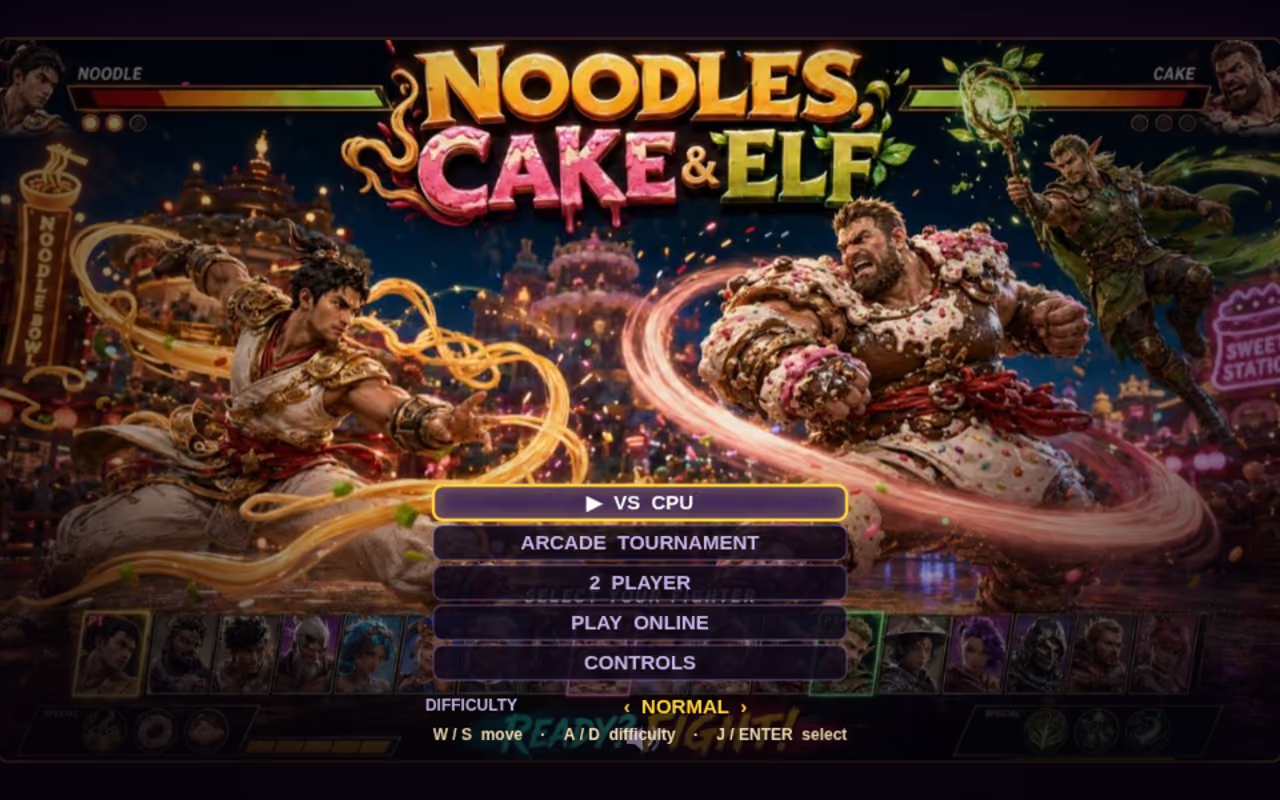
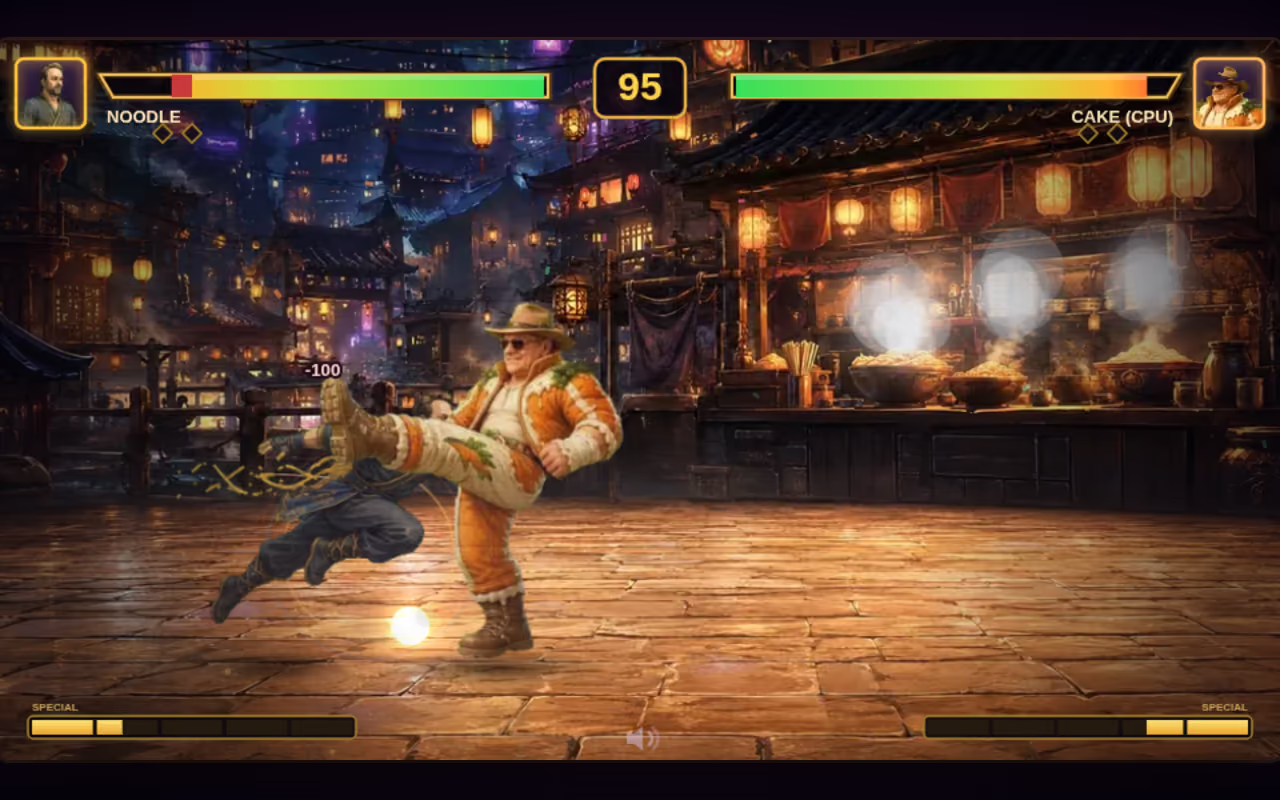
It plays like the fighters this age group grew up on, because that is the reference point: health bars, a ninety-nine second round timer, special meters filling at the bottom, damage numbers popping off a landed hit.

How a friend group becomes a roster
This is the part people do not expect, and it is where the gift stops being a novelty.
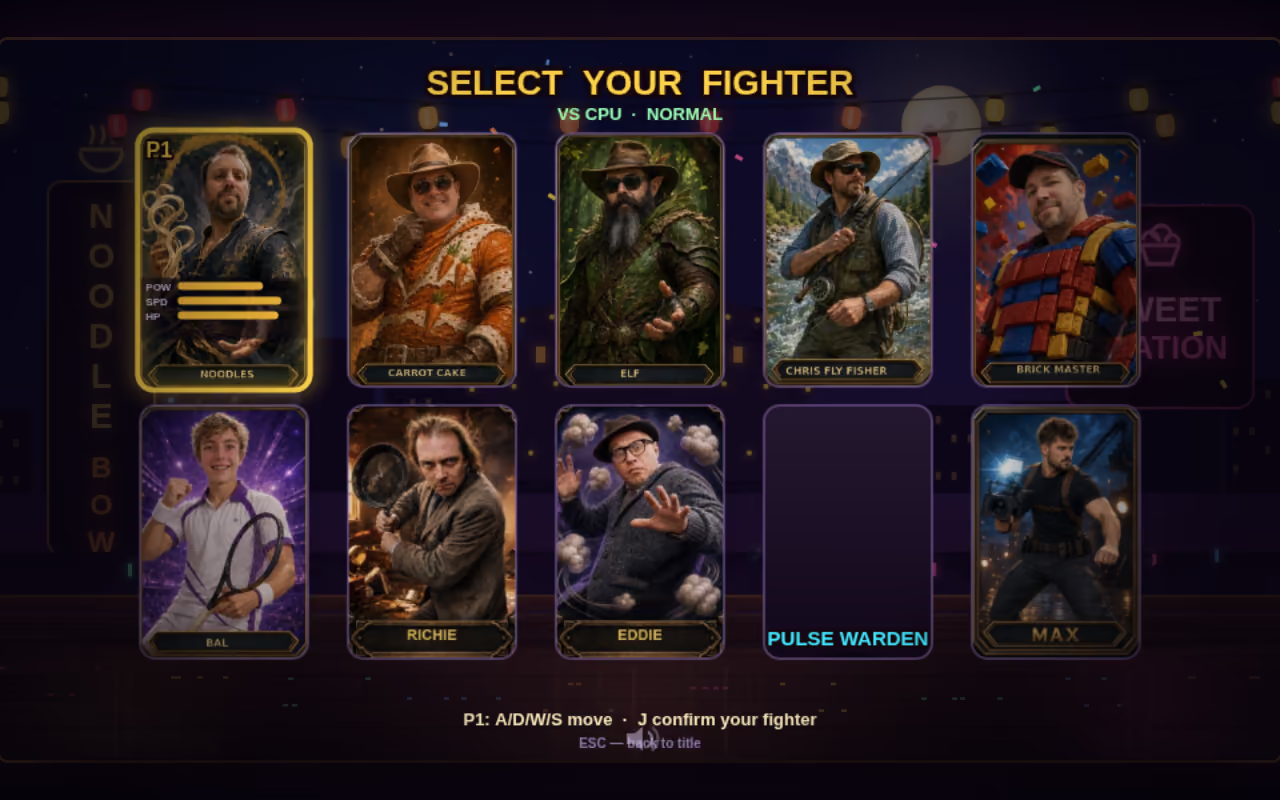
Look at the roster rather than the artwork. Noodles. Carrot Cake. Elf. Chris Fly Fisher. Brick Master. Bal, Richie, Eddie, Max. Those are not fantasy names dropped onto stock characters. Each one is a real person in the group, painted from a photograph they sent, and named for the thing everybody already rips them for. The one who fishes is the fisherman. The one who builds is the Brick Master.
That is the whole mechanism. The brief is where the gift comes from, not the art. We ask what each person is known for, and it comes back as a fighter with a name, a look and a signature move built from it. One of the moves in this build is a noodle whip, which needs no explanation to the group it was made for and means nothing to anybody else. That is the correct ratio.
The practical consequence for a thirtieth: the birthday person is player one, and everyone at the party is a selectable opponent. Nobody is a background extra. If the group is what has held together since school, this puts all of them on one screen with the birthday person at the front of it.
If the friend group is the gift rather than the birthday person, we have written that up on its own in a custom fighting game starring your friend group, which goes further into rosters, taunts and tournament nights than there is room for here.
What you send us
Less than people assume, and none of it is technical.
- One clear photo per person. Well lit, face visible. Not professional, just usable. Sunglasses, heavy shadow and distance are what weaken a likeness.
- A line about each person. What they are known for in the group. This is the single most valuable thing you send, and it is the part that turns a portrait into a fighter.
- The occasion and the date. So the scope is built around a real deadline rather than compressed into one.
You do not need to know what genre you want. If you have a strong idea, bring it; if you do not, that is genuinely useful, because it leaves room to propose the format that gets the most out of the cast you have.
The practical details:
- 1-Bit, from £99. One cartoonised hero, one themed level of around ninety seconds, up to three guest cameos, an original short score, delivered as a private web link. This is the tier that works as a straightforward gift from one person.
- 8-Bit, from £349. Hero and co-star, three cinematic levels plus a boss encounter, up to twelve cameos, an original soundtrack, intro and outro cutscenes, web and downloadable build. This is the group-gift tier.
- 16-Bit, from £1,200. A full-length adventure or fighter with unlimited cameos, cutscenes throughout and an arcade tournament mode.
It arrives as a link that works on any phone or laptop, so it can be opened at a table in front of everyone. And it is theirs permanently: the build is yours to keep, share and replay long after the day. Our cost guide explains what moves the price between those tiers, and the arcade has two finished builds you can play right now rather than take our word for.
Suits: people with a strong sense of humour about themselves. Groups splitting a budget. Anyone who has genuinely run out of things to want.
How to choose
If the friend group is splitting it, the arithmetic and the etiquette are in how to split the cost of a group gift, and what the smallest tier includes is in what you actually get for £99.
Do you know the specific hardware? If yes, restored hardware is the highest-confidence option on this list. If you are guessing, avoid it entirely; the wrong console is worse than no console.
Is this from one person or a group? Individually, the soundtrack, the artwork and the archive all punch above their cost. As a group, commissioned work becomes available and is difficult to beat.
Do they need to keep it? Tournaments and experiences are excellent and evaporate. Hardware, artwork and a commissioned build do not.
Timing, which matters more than people think
Two of the strongest options on this list have lead times, and both fail badly if left late.
Restored hardware depends on finding the right machine in the right condition, which is a search rather than a purchase. Start two months out and be prepared for the specific console you want to take several weeks to surface at a sensible price.
Commissioned work has a schedule agreed per commission, which means the earlier you enquire the more of the range is available to you. Enquire with the birthday date in hand even if it is months away. A build designed around a real deadline is a different proposition from one compressed into whatever time is left.
The archive gift has no supplier lead time at all, but it has a social one: you are waiting on other people to send you things, and other people are slow. Six weeks is realistic, four is tight, and a fortnight produces an archive consisting of contributions from the two friends who reply to messages.
If you are down to the final week, be honest about it and choose from the things that survive short notice: the soundtrack, an experience booked for a date, or money toward something they have mentioned wanting. A rushed version of a good idea is usually worse than an unhurried version of a modest one.
The same guide, further up the family tree
Gaming nostalgia is dated tightly, and the right gift changes completely every decade or so. If there are several people in the family to buy for, the era each one imprinted on is what decides it.
- Around forty: cartridges, demo discs and bedroom consoles. The 90s generation.
- Around fifty: coin-ops, and the arcade as a place rather than a product. People who grew up in arcades.
- Around sixty: a Spectrum or a BBC Micro, tape loading and typed-in listings. The home computer generation.
- Around seventy: Pong and Space Invaders, met in a pub or on holiday rather than at home at all. The first gaming generation.
What to avoid
Anything branded with the word "gamer". Anything that treats the hobby as a personality quirk. Novelty mugs, slogan socks, controller-shaped anything. Someone who has played seriously for twenty-five years is being condescended to by these, even when they laugh.
The safer instinct is to be specific. One exact game, one exact console, one exact year. Specificity is the whole trick, which is also why commissioned work tends to land: it is specific by construction, and the brief is where that specificity comes from.
If the birthday in question is a fortieth rather than a thirtieth, and you are planning the party rather than buying the gift, we have written that up separately in 40th birthday party ideas guests actually remember.
For a partner rather than a friend, Valentine's gifts when your partner plays games covers why the obvious gaming gifts miss.