Almost every question about the price of bespoke work is really one question, and it has a short answer: there is no second copy to sell.
Everything else follows from that, and it is worth setting out properly rather than defending a number.
The economics of one customer
A game sold as a product costs an enormous amount to make and almost nothing to copy. The build cost is spread across everybody who buys it, which is why something that took years can sell for the price of a takeaway.
A commission has one customer. Whatever it costs to make lands on that one order, because there is nobody else to share it with. There is no back catalogue, no second season, no long tail of sales after launch.
That is not a markup. It is the whole structure of the thing, and it is the same reason a tailored suit and a suit off a rail are different prices despite being made of similar cloth by similarly skilled people.
What genuinely cannot be reused
Two things, and they are the two things that make it worth commissioning at all.
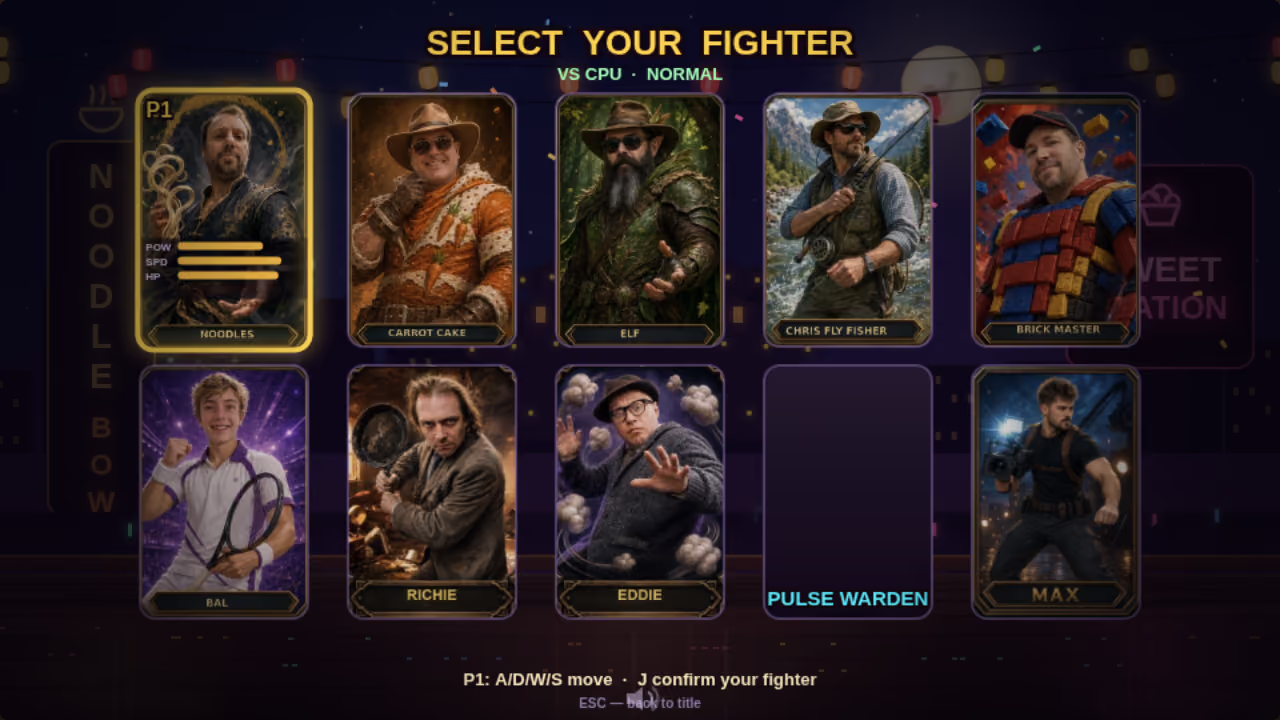
The artwork. Characters are painted from photographs of specific people, at the size the game needs, in the poses the game uses. That work is worth exactly nothing to the next customer, because it is a picture of somebody they have never met. How it is done is in how a photograph becomes a character.
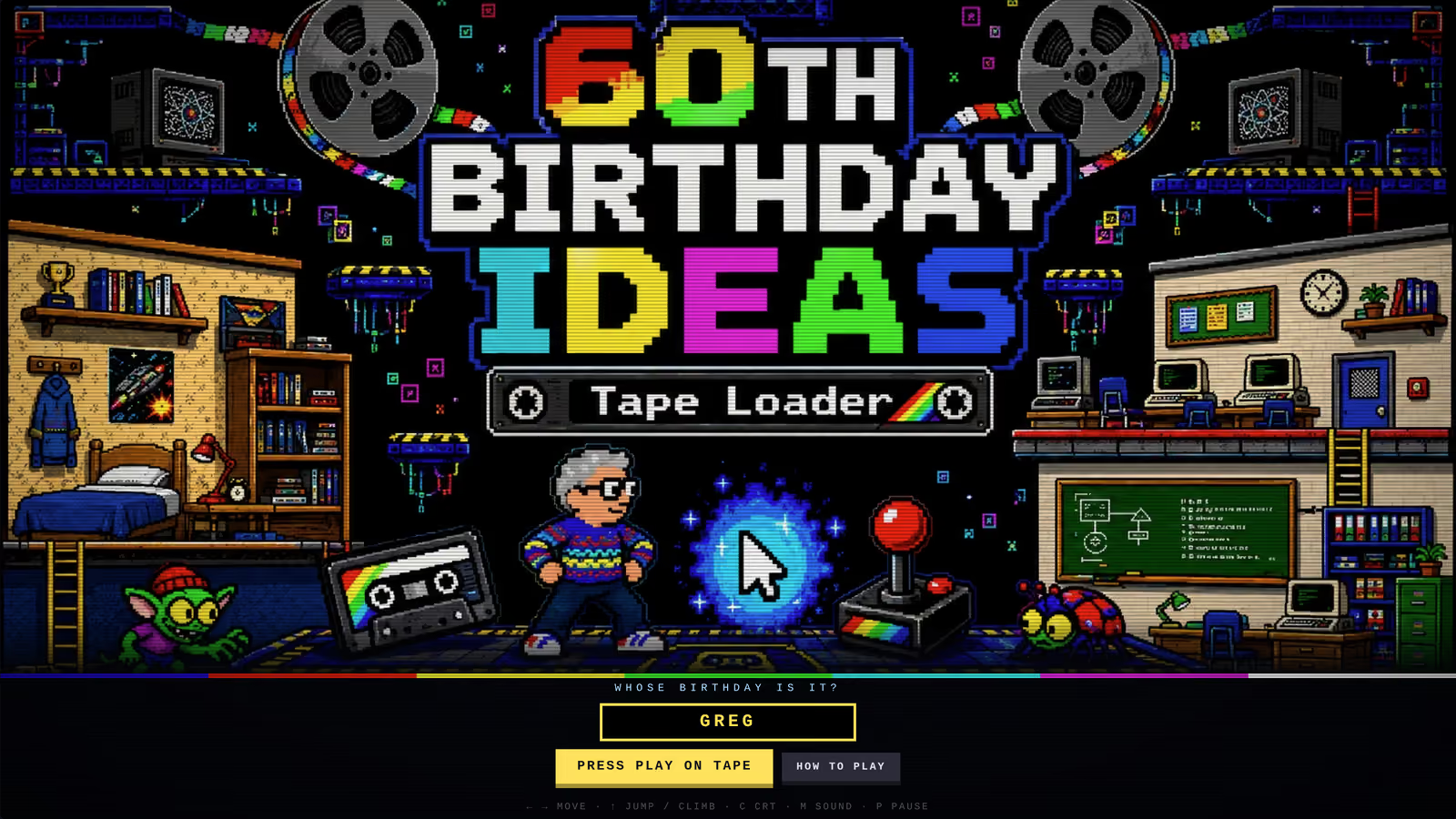
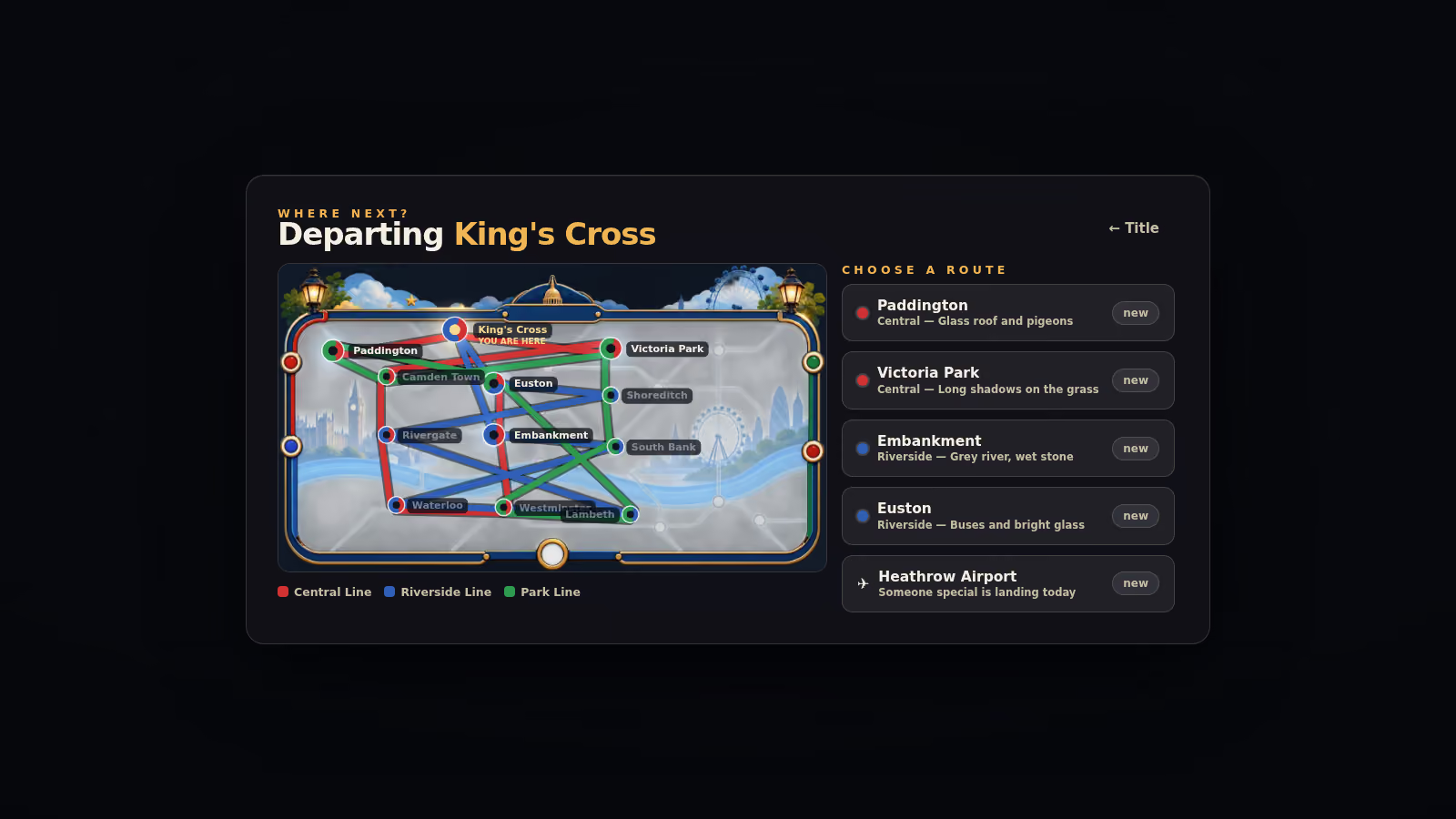
The brief. A level built around one family's house, one road, one running joke, is unusable anywhere else. That is the point: the reason a commission lands is that it could not have been given to anybody else, which is the same reason none of it can be sold twice.
Our largest build carries 502 illustrations. Not one of them will appear in another commission.

What is reused, and why it matters to the price
This is the part that keeps the number down rather than up.
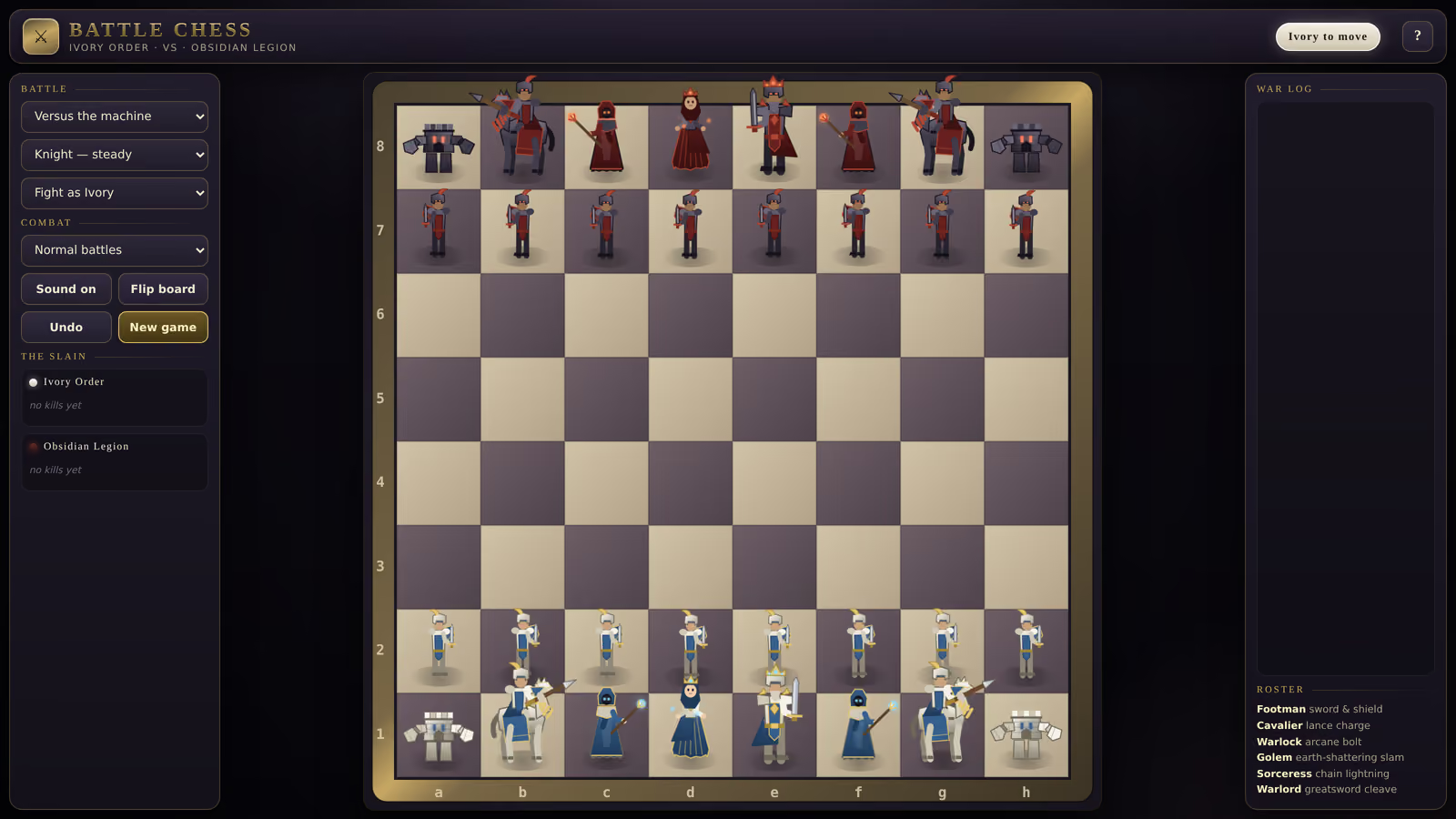
The engine is shared. Movement, collision resolution, the interface, the way input is handled, how a level is assembled, how progress is saved. Those problems were solved once and every build since has inherited the solutions, which means no commission pays to have a character learn to jump again.
That reuse is also a quality argument rather than only a cost one. A bespoke system written fresh each time would arrive with fresh bugs each time. A shared one has had its problems found across every build that came before, which is why the category of failure where a one-off game simply does not play well is not on the list in what can go wrong with a commission.
The testing is shared too. Every build is driven by a program that plays the level with simulated input and asserts the end can be reached, described in proving a game is actually finished. Writing that once and running it on everything is what makes a short commission affordable to guarantee.
Where the money actually goes
Roughly, and in the order that surprises people least once it is said out loud.
Painting. The largest share on almost every build. Characters, backgrounds, props, and the passes it takes to make a likeness carry at the size a character actually appears.
The brief becoming a design. Turning "his allotment and the dog" into a level with a shape, a route and a reason to move through it. This is the part that is invisible in the finished thing and decides whether it works.
Music. Written per build rather than licensed, which is why the short tier gets a short score.
Testing and the pass on real hardware. Every build is opened on an actual phone, because two genuine defects were found that way and neither was visible in a resized browser window.
None of those four gets cheaper with volume, because there is no volume.
Why there is no budget template version
The obvious cost saving would be a template: one pre-built game, a name dropped in, a face pasted on.
We do not offer it, and the reason is not principle. It is that the resulting object is the exact outcome a commission exists to avoid. A generic game with somebody's name in it lands with a polite thank you, which is the failure mode described in what can go wrong with a commission. It would be cheaper and it would be worse, and there is already an enormous supply of cheap personalised objects that nobody keeps.
What we do instead is scale the scope. The tiers differ in cast size, length and whether there are cutscenes, and not in how carefully anything is made. That is set out in how much a custom video game costs and, for the entry tier specifically, in what you actually get for £99.
What this means
One customer carries the whole build cost. That is most of the answer.
The artwork and the brief are the parts that cannot be sold twice, and they are also the parts that make it worth doing.
The engine is why it starts at £99 rather than several times that.
And a bigger budget buys more, not better. The standard is the same at every tier, which is a deliberate decision rather than a marketing line.